Why Topical Hair Treatments Often Stop Reaching the Scalp, And What One User Tried Instead
A first-person account of years spent trying different hair-thinning products, and why delivery, not just ingredients, turned out to matter for one user.
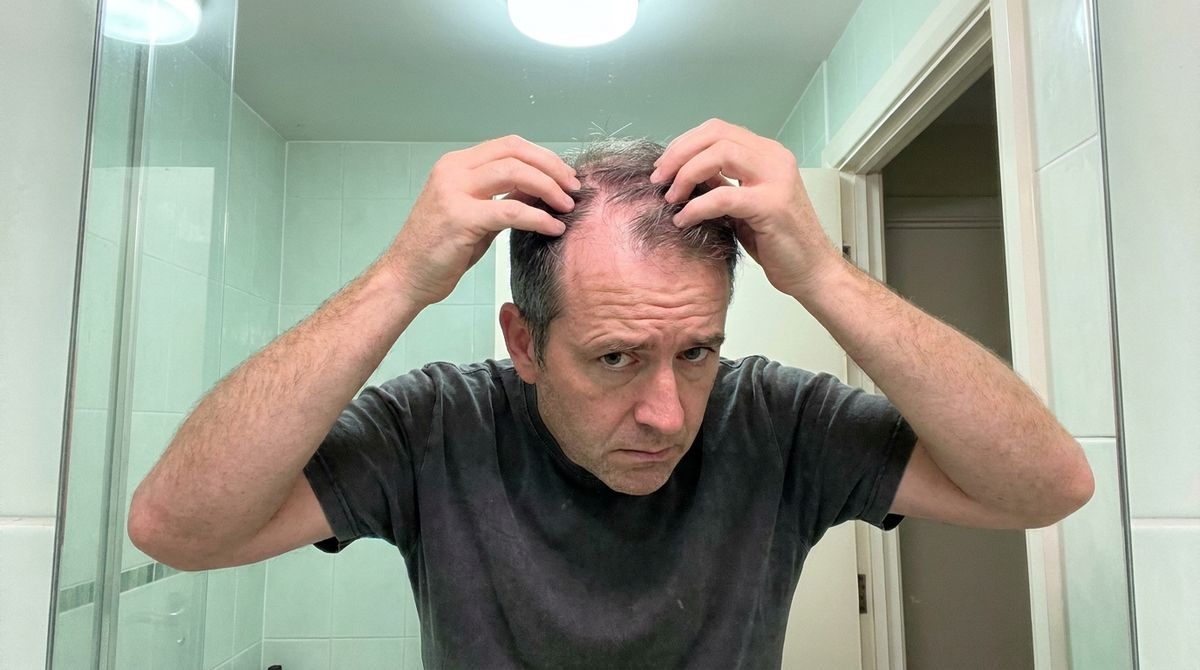
Thinning hair, a receding hairline, a bald spot on the crown that kept getting a little bigger.
For nine years, that was just how it was for me.
Shampoos, oils, serums, I tried a lot of things, with mixed results at best.
And still, the thinning that didn't use to bother me before my 40s kept getting worse every year.
That's frustrating, and it's common.
It's also worth understanding why it happens, because the reason may be simpler than it seems.
The Delivery Problem
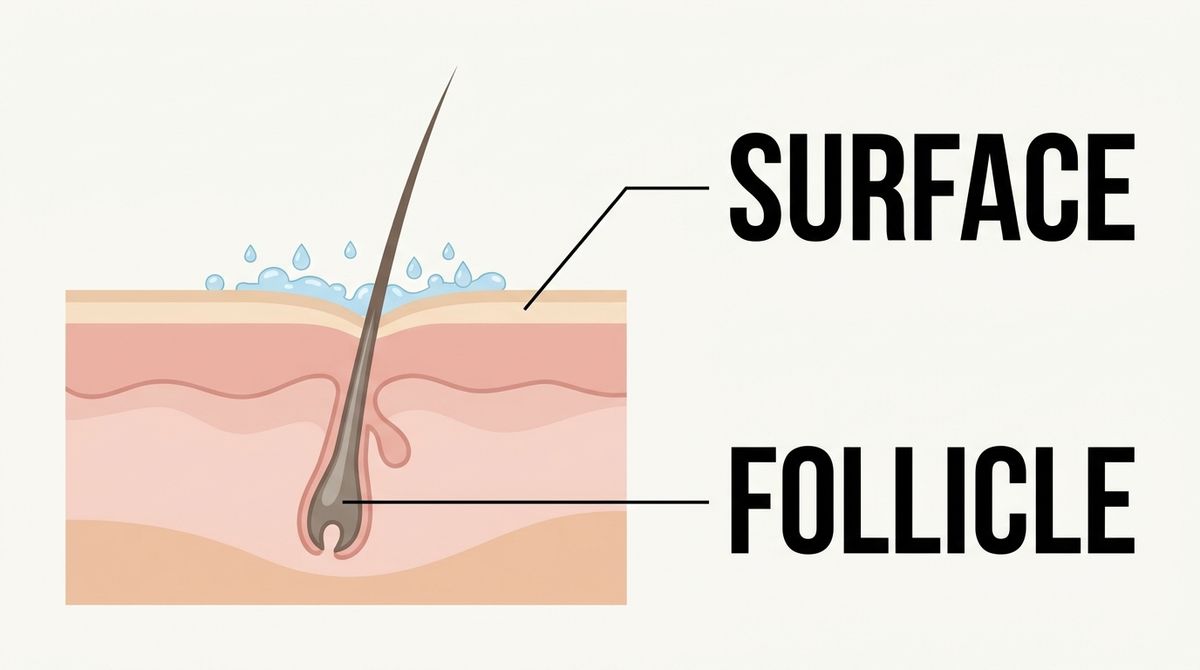
Most topical hair products sit on the surface of the scalp.
The outer layer of skin is very good at its job: keeping things out.
That's useful for protection, but it also means a lot of what we apply to our scalp, serums, oils, foams, never makes it down to where the hair follicle actually lives.
Researchers have looked at this problem directly.
A review published in a peer-reviewed dermatology journal describes how microneedling-based "microinfusion" techniques were developed specifically to help deliver treatments past the skin barrier and closer to the follicle, since traditional topical application alone often isn't enough.
Reading that was the first time the pattern made sense to me: it wasn't that nothing I'd tried could possibly help, it's that very little of it was reaching the layer where it needed to work.
SECTION HEADER
Over the years I tried a number of over-the-counter serums, oils, and a couple of prescription options, with results that varied and, for me personally, didn't hold up long-term.
Everyone's experience with hair thinning is different, and what works, or doesn't, varies a lot from person to person.
If you're currently using or considering any hair-loss treatment, prescription or otherwise, that's a conversation worth having with your doctor or dermatologist rather than a stranger's blog post.
What I hadn't tried was anything that changed how a treatment was delivered to the scalp, rather than just what was in it.
What This Looks Like in Practice
Instead of relying only on what you apply to the surface, a micro-infusion approach is designed to help a serum reach past the outer layer of the scalp, as part of a simple biweekly routine, similar to a ten-minute grooming step before bed.
The Product: BlueForce FollifusionTM Micro-Infusion System
It pairs a micro-infusion device with a serum formulated with GHK-Cu (copper peptide) and Adenosine, ingredients studied in the context of scalp and skin care, designed to be used together as part of a nightly-to-biweekly routine.
- Micro-Infusion Device, gold-plated micro-channel applicator designed to help the serum reach past the surface layer of the scalp.
- GHK-Cu (Copper Peptide), a peptide commonly studied and used in scalp and skin-care formulations.
- Adenosine, an ingredient used in hair-care formulations, often studied for its role in scalp care.
- Small-Batch Production, manufactured in batches by the brand's lab; availability can vary by order volume.
How It's Used
Wash and dry your scalp before your first session.Load a serum vial into the device.
Stamp gently across the hairline, temples, and crown, following the product instructions, a full session takes about 10 minutes.
Repeat approximately once every two weeks, or as directed on the package.
Allow several sessions over several weeks before evaluating whether it's making a difference for you. As with any wellness product, results vary from person to person.
Some mild redness after a session is normal for some users and generally fades.
This product is a cosmetic device and serum system; it is not intended to diagnose, treat, cure, or prevent any disease or medical condition, and it hasn't been evaluated by the FDA for that purpose. My Experience, Timeline
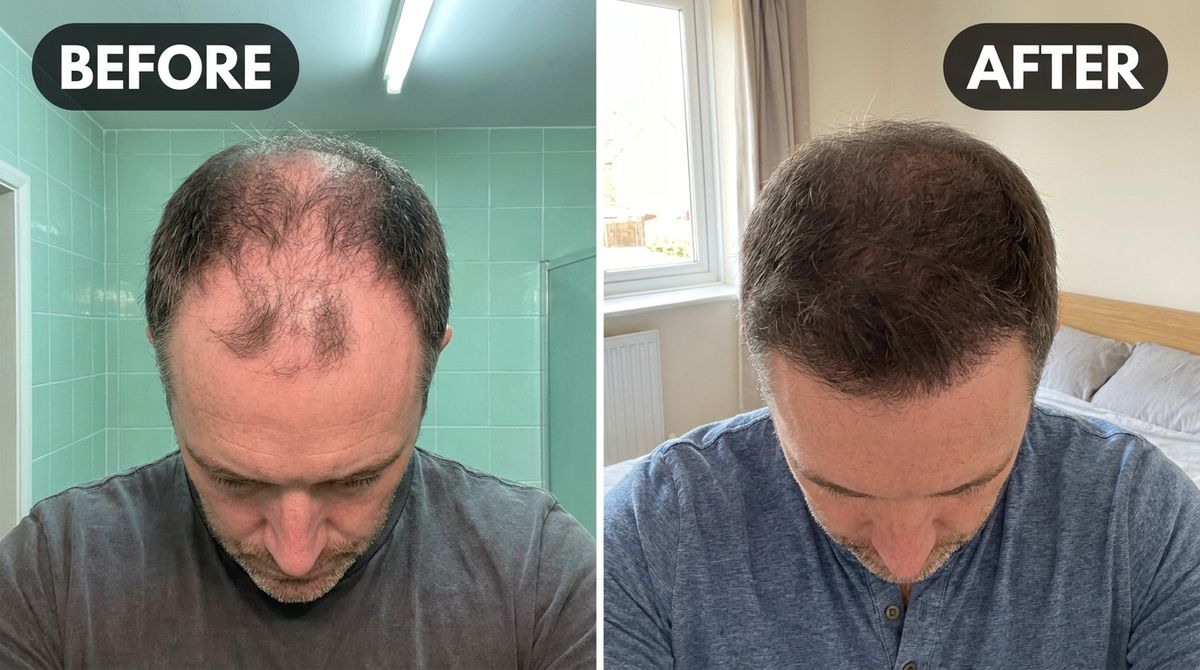
The following describes one individual's personal experience. It is anecdotal, is not typical, and is not a guarantee of any outcome, hair thinning has many causes and results vary widely from person to person.
First couple of weeks: I noticed less hair on my pillow and in the shower than before. Weeks 2–4: Some fine new hairs appeared along my hairline and at the edges of thinning areas.
Weeks 5–8: The hair I did have seemed to look a bit thicker to me; less scalp showing through under bathroom lighting.
Around month 6: My hairline and crown looked noticeably fuller to me than when I started, and I've kept up a session every two weeks since. I can only speak to my own experience, this isn't a claim about what anyone else should expect.
What Other Customers Have Said The following reflect individual customer accounts submitted to the manufacturer. They are anecdotal, results vary, and are not a guarantee of any outcome.
How long before I'd notice anything?
Customer accounts vary, but many who report noticing a difference describe several weeks to a few months of consistent use before forming an opinion.
Hair growth cycles are naturally slow, and results are never guaranteed or typical for everyone.
Can I use this alongside minoxidil, finasteride, or other treatments? Talk to your doctor or dermatologist before combining any new scalp treatment with an existing prescription or over-the-counter product.
This page isn't a substitute for that conversation.
Is this a medical treatment for hair loss?
No. The Follifusion system is a cosmetic device and serum system.
It is not intended to diagnose, treat, cure, or prevent any disease or medical condition, and these statements haven't been evaluated by the FDA.
Is it safe to use at home?
The device is designed for at-home use following the included instructions.
If you have a scalp condition, are on blood thinners, or are unsure whether at-home microneedling is appropriate for you, check with a healthcare provider first.
Before You Try It
This product is a cosmetic device and serum system, not a medical treatment, and is not intended to diagnose, treat, cure, or prevent any disease or condition.
If you have a scalp condition, take blood thinners, are pregnant or breastfeeding, or are under a doctor's care for hair loss or any other condition, talk to your doctor before starting a new at-home scalp device or serum.
These statements have not been evaluated by the Food and Drug Administration.
Pricing & Availability
BlueForce Follifusion is sold directly through the manufacturer's website. 50% OFF

Hair thinning has more than one possible cause, and no product works identically for everyone. For me, the difference wasn't a new miracle ingredient, it was trying a delivery method aimed at getting a serum past the scalp's surface layer.
If you're dealing with thinning hair, it's worth a conversation with your doctor or dermatologist about what's actually driving it before choosing any product. References
REFERENCES
- Barletta MS, et al. Scalp Microinfusion: A Novel Drug Delivery Technique for Hair Loss Treatment. PMC / peer-reviewed dermatology literature review. doi: 10.1159/000506314.
- This is a non-exhaustive reference list. On the live landing page, this citation should be a direct clickable link, and any additional product-specific claims should be backed by their own verifiable source.
- Advertisement Disclosure