The Real Reason Your Hair Treatments Never Worked
A scalp doctor of 17 years explains why every foam and pill failed, and the at-home method that finally reached the follicle and woke it back up.
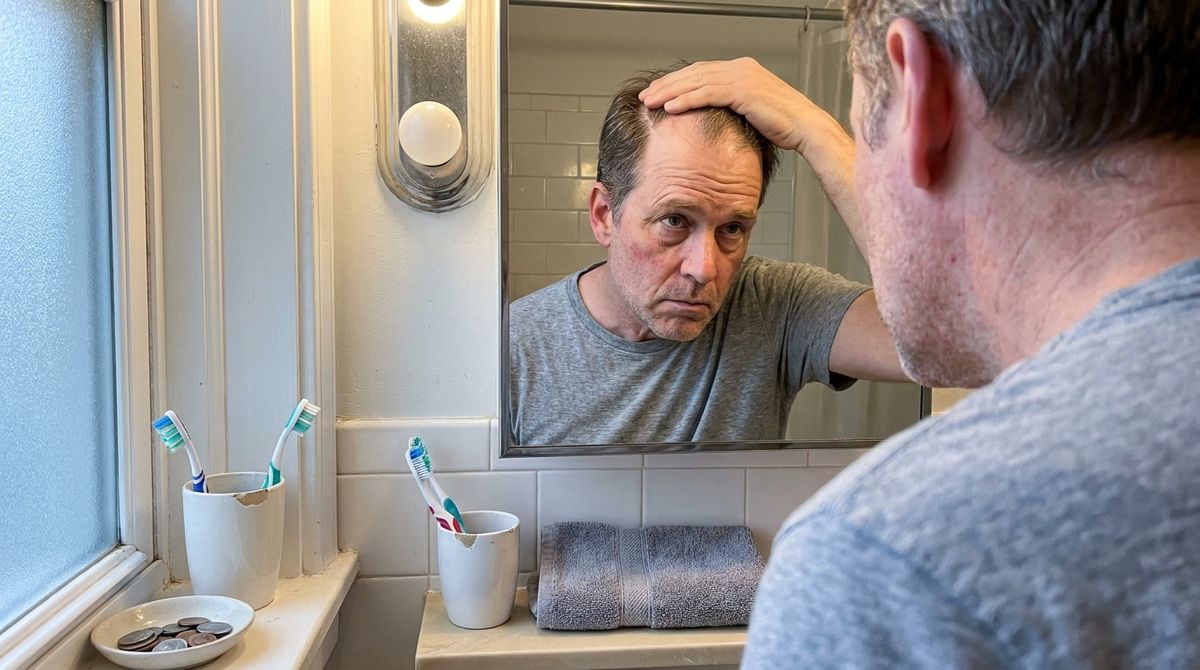
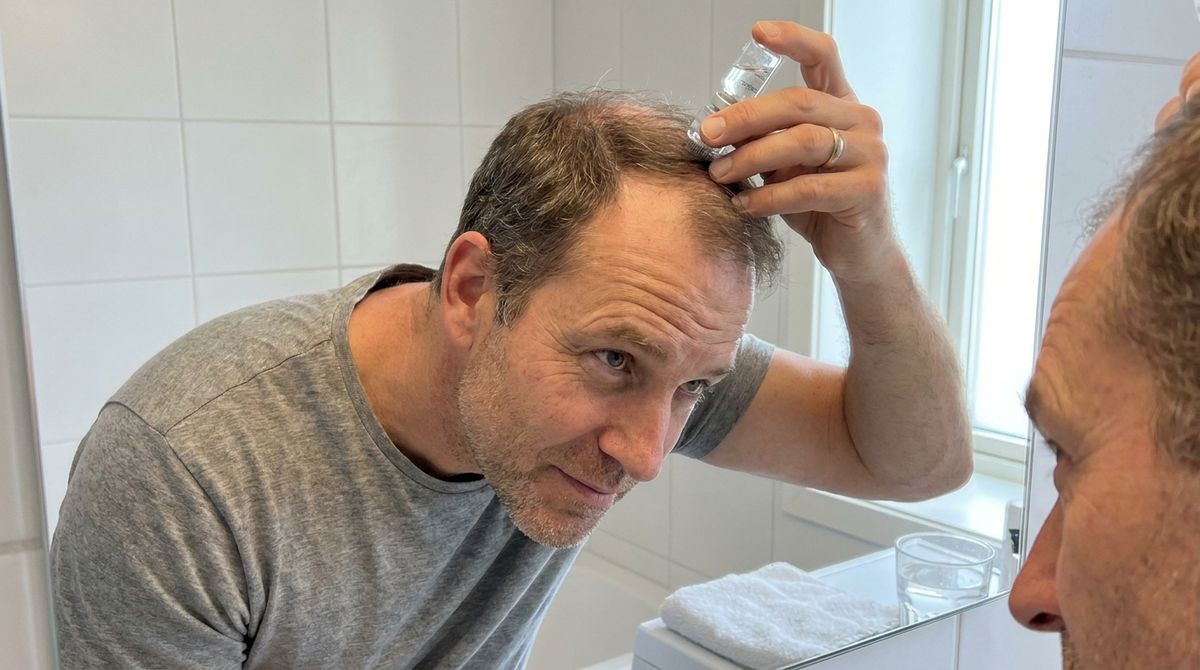
You wake before the alarm. It's still dark. And the first thing your hand does, before coffee, before you're even fully awake, is go to the top of your head.
You feel for it. The thin patch. The temple that's crept back another half-inch. You already know it's worse. You just check anyway.
Then the shower. More hair on your fingers. More on the drain cover. You count it without meaning to.
Maybe you've tried the foam. Twice a day, greasy, and the second you stopped, it all fell out again. Maybe the pill, until you read what it does to other things and quietly put the bottle away. Maybe the $40 shampoos, the biotin gummies, the little roller from a marketplace box that just hurt and did nothing.
Nothing held. And somewhere along the way you decided this was just how it goes now.
It isn't. I've spent 17 years looking at scalps under magnification, and I can tell you exactly why none of it worked. It has almost nothing to do with your genes.
What I Used To Tell Men In My Chair
There's a line I said in the exam room for most of my career. A man would sit down, take his cap off, and ask the same question every time: can I get it back?
And I'd look at the receding front, the bare crown, and I'd say: "We can try to slow it. But what's gone is gone. Manage your expectations."
I believed that. I'd trained on it. The textbooks said pattern loss was a one-way road, and I'd watched it run one way in thousands of men.
So I sent them off with the same two prescriptions everyone gets. I told them to be patient. I told them not to expect miracles.
I wasn't lying. I just didn't have anything better. And it never sat right that the best I could offer a 50-year-old man was a slower version of the same loss.
The Dinner Where I Couldn't Help My Own Wife

It became personal at a retirement dinner, two springs ago.
My wife, Linda, had stopped letting me photograph her from certain angles. I'd noticed and said nothing. That night a colleague raised a phone for a group photo, and the flash caught the top of her head. The thinning down her part, plain to everyone at the table.
Someone made a small, kind joke. "New lighting, that's all." Linda laughed along. But under the table her hand found mine and held it too tight, and on the drive home she stared out the window and finally said, quietly, "You fix this for a living. And you've never once said you could fix it for me."
I didn't have an answer. I'm a hair physician. My own wife had been hiding under her hair for two years, three feet from me, and I'd handed her the same shrug I handed strangers.
That was the night I stopped accepting the road only runs one way.
The Shelf Of Half-Used Bottles
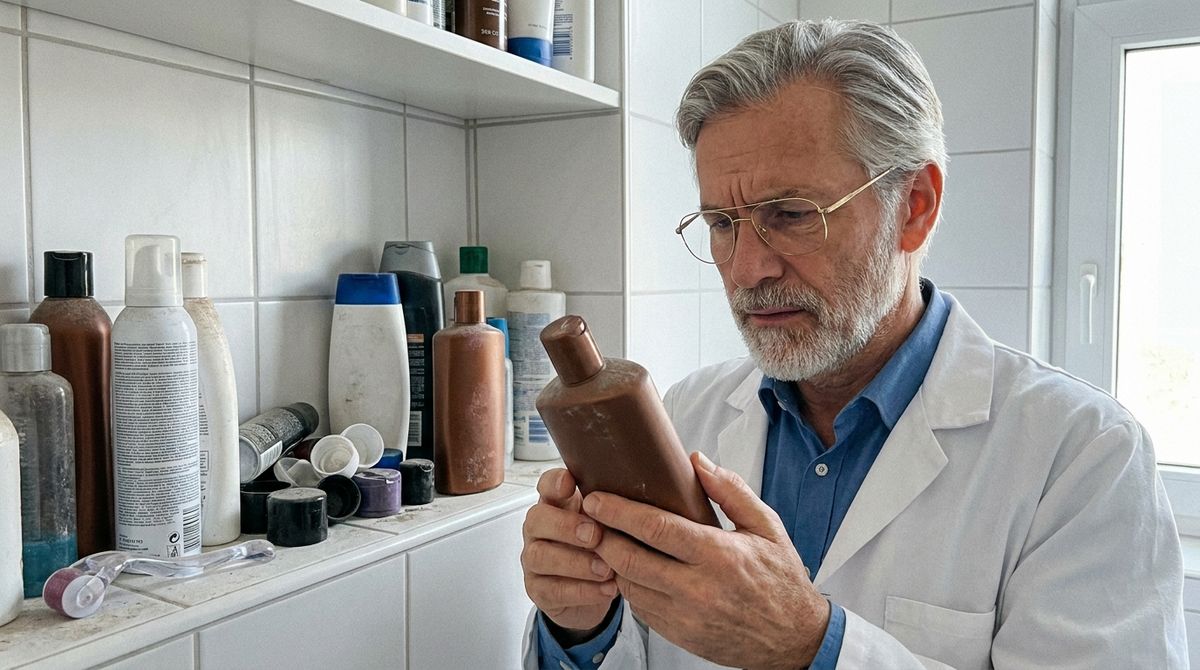
I went home and looked at what Linda had been quietly trying. There was a whole shelf of it.
And I realized I'd been recommending most of it for years without ever asking the obvious question: where does it actually go once it's on the scalp?
So I ran the list. Every product, and the exact reason it dead-ends.
- Minoxidil foam. Forces a little blood to the surface but never touches the cause. Stop using it and you lose everything in months. It rents hair. It doesn't give it back.
- Finasteride. Works on the hormone everywhere in the body at once, which is exactly why so many men quit it. And it only slows loss. It doesn't grow anything new.
- DHT shampoos. They sit on the scalp for sixty seconds, then rinse straight down the drain. They never get below the skin.
- Biotin and 'hair' vitamins. Feed the whole body in general and the starved follicle in particular not at all.
- The cheap roller. Half the right idea. It pokes holes but pushes nothing through them, so the holes close and the chance is wasted.
Why The Faucet Stopped, And Why It's Still There
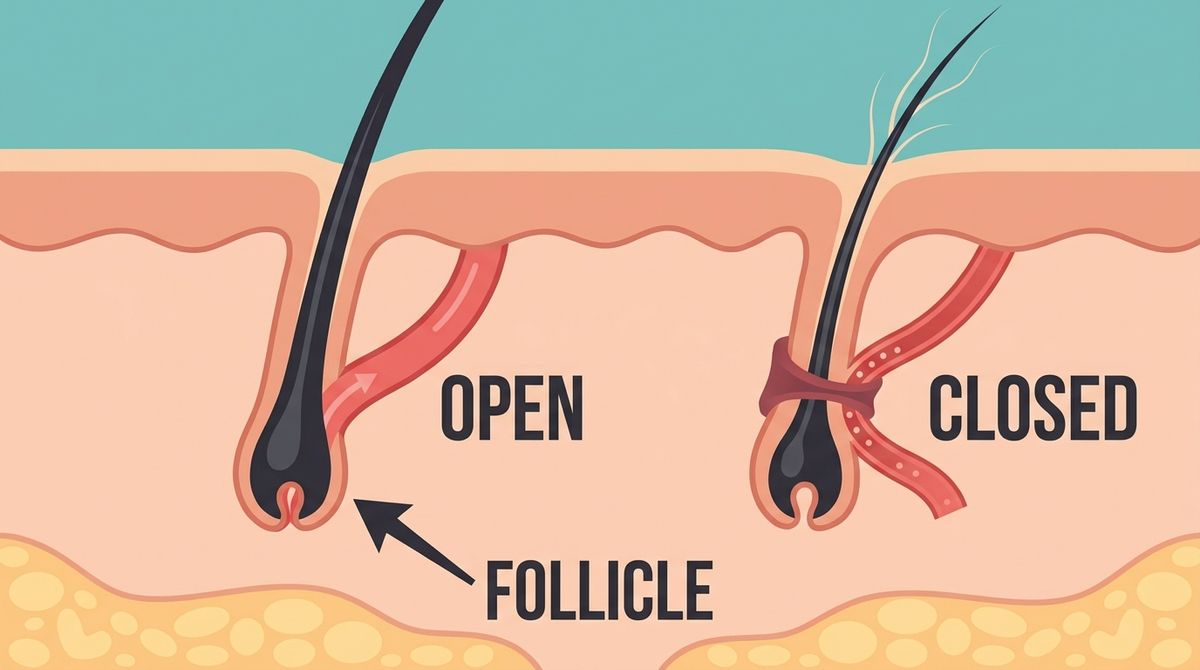
Here is the thing I'd been getting wrong for 17 years. Not the biology of how a follicle dies. The fix.
Think of each follicle as a faucet plumbed into a line under your scalp. Water, the blood, oxygen, and signals that grow hair, runs up that line and out the tap.
The hormone men call DHT doesn't smash the faucet. It quietly closes the valve upstream. It clamps onto the follicle, chokes the line feeding it, and the flow drops to a trickle.
Each cycle the tap runs weaker. The hair comes in thinner. Eventually the faucet looks dry and dead.
But the faucet isn't broken. The water is still in the wall. The valve is just shut.
That's what every textbook missed. We called the dry tap gone and walked away. It was never gone. It was waiting for someone to open the line again.
And that's the whole problem with foams and shampoos. The active is good water, but you're pouring it on the outside of a sealed pipe. The skin is built to keep things out.
Around 97% of any topical evaporates before it reaches the follicle root. You can flood the wall all day. Not a drop gets in.
Open The Line, Then Feed It
Once I saw it as plumbing, the answer was almost embarrassing. You don't pour water on a sealed pipe. You make a clean opening into the line, and you put the right water through while it's open.
That's two jobs that have to happen in the same motion. I started calling it Open-Line, Then Feed. I built the first rough version on my own kitchen counter to test on myself before I'd ever try it on Linda.
- Open the line. Fine needles make hundreds of clean, temporary channels into the scalp at the exact depth the follicle root sits. For 60 to 90 minutes after, the path to the follicle is wide open. The small injury itself tells the body to rush blood and repair signals to the area.
- Feed it the right water. In that same motion, a peptide serum flows straight down the open channels to the root. Absorption jumps by up to 3,000% compared to anything rubbed on intact skin. For the first time, the actives are inside the pipe instead of pooled on the wall.
- Take the clamp off. Caffeine and rosemary, delivered locally, ease the hormone's grip on the follicle through two separate natural paths, without touching anything else in the body the way a pill would.
The Letter From The Licensing Board
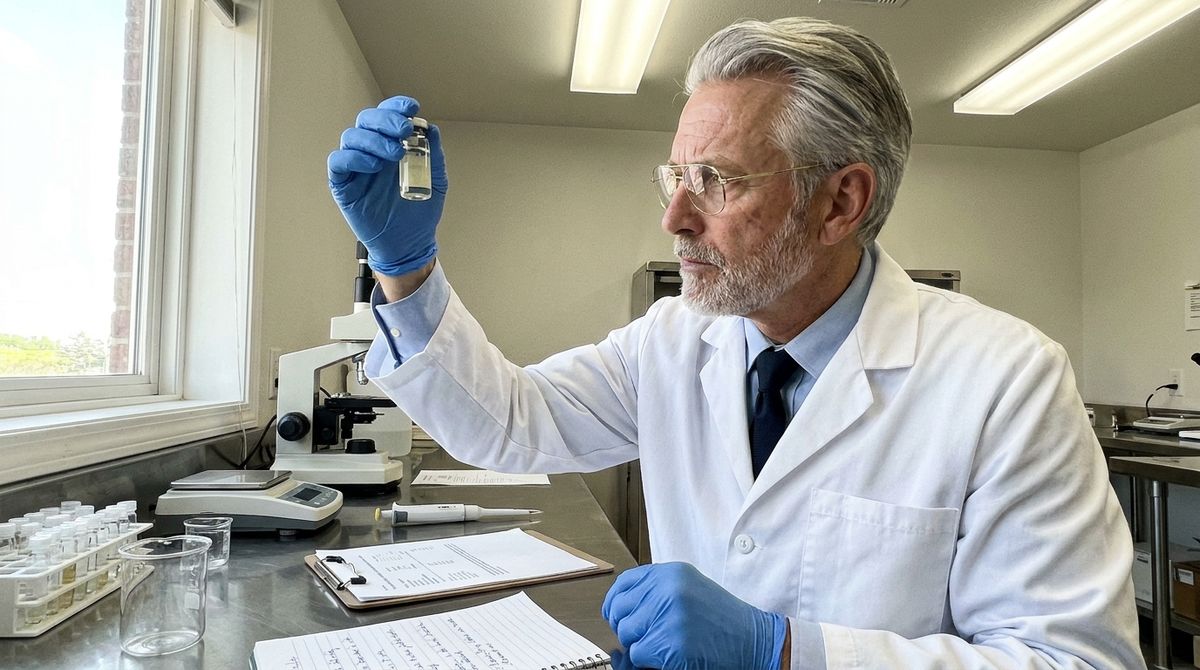
I sourced a compounding chemist to make small peptide batches, ran the method on myself, then on a long-time patient.
I started using it with more of my own patients. Word moved. And then an envelope arrived from the state licensing board.
A formal complaint. A request that I justify recommending a method that fell outside accepted standard of care. The standard of care, of course, being the two things that had failed every man on that shelf.
I understood it, in a cold way. To accept that dormant follicles could be reopened at home, the field would have to stand up and admit it had told men the road ran one way for thirty years, and been wrong.
That's not an easy thing for a profession to say out loud. It's easier to send the letter.
What It Became: BlueForce Follifusion
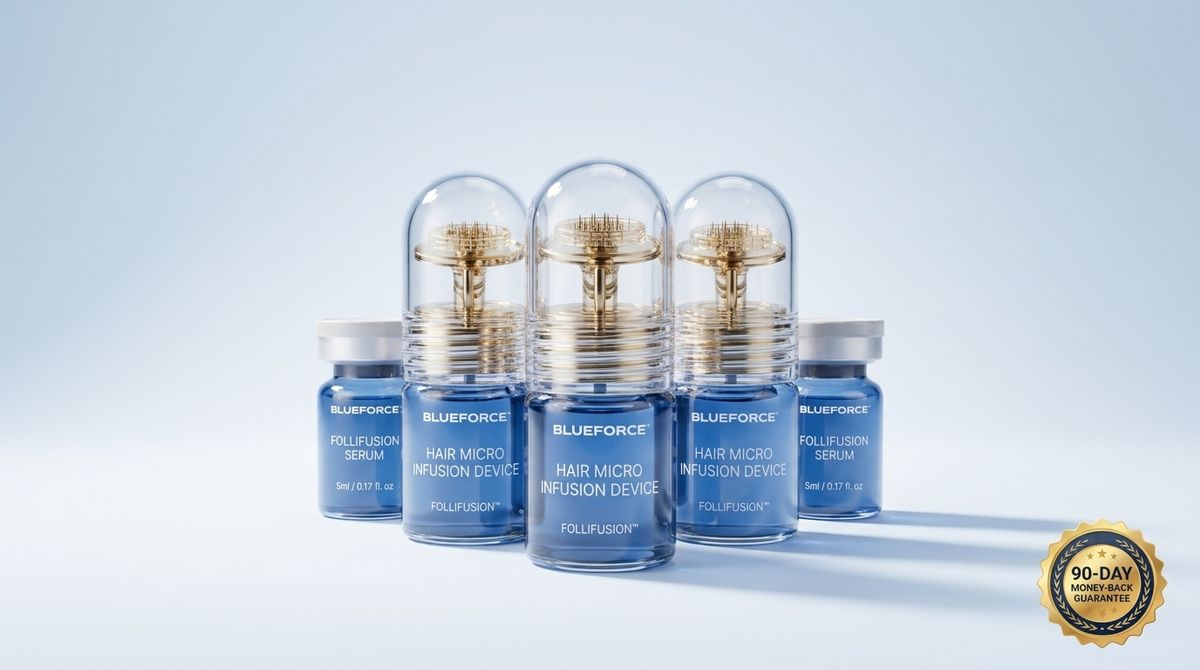
I'm one physician with a kitchen-counter prototype. To make it consistent and safe enough for a stranger to use at home, I partnered with a small formulation and device team. The finished system is called BlueForce Follifusion.
It's two parts working as one: a microinfusion device with a 24-karat gold needle head, and a peptide serum vial that loads straight into it. You pour the serum in, stamp across the thinning zones, and the same press that opens the channels pushes the serum down them. That's the whole 'open the line, then feed it' idea in one motion.
Here's what's in the water, in plain terms:
- GHK-Cu. A tiny copper-carrying protein messenger (a 'peptide' just means a small protein the body uses to send instructions). It's so good at rebuilding tissue that clinics use it on serious burns. In the follicle it repairs the damage and rebuilds the blood supply around it. In clinical observation it cut shedding by up to 93%.
- Adenosine. A growth-phase activator used in Japanese hair clinics for decades. It tells a woken follicle to keep producing, and to grow a thicker, stronger strand. In clinical study it has held its own against 5% minoxidil for visible regrowth, without the rebound shedding when you stop.
- Caffeine + rosemary. Two natural ways to ease the hormone's clamp on the follicle, locally, without going through your whole system.
- 8-form collagen + niacinamide + hyaluronic acid. Rebuild the foundation that anchors each hair and keep the scalp healthy, so the new growth holds instead of falling back out.
- 24K gold needles. Gold is naturally antimicrobial, so every channel stays clean for the hour-plus it's open.
How It Plays Out Over Six Months
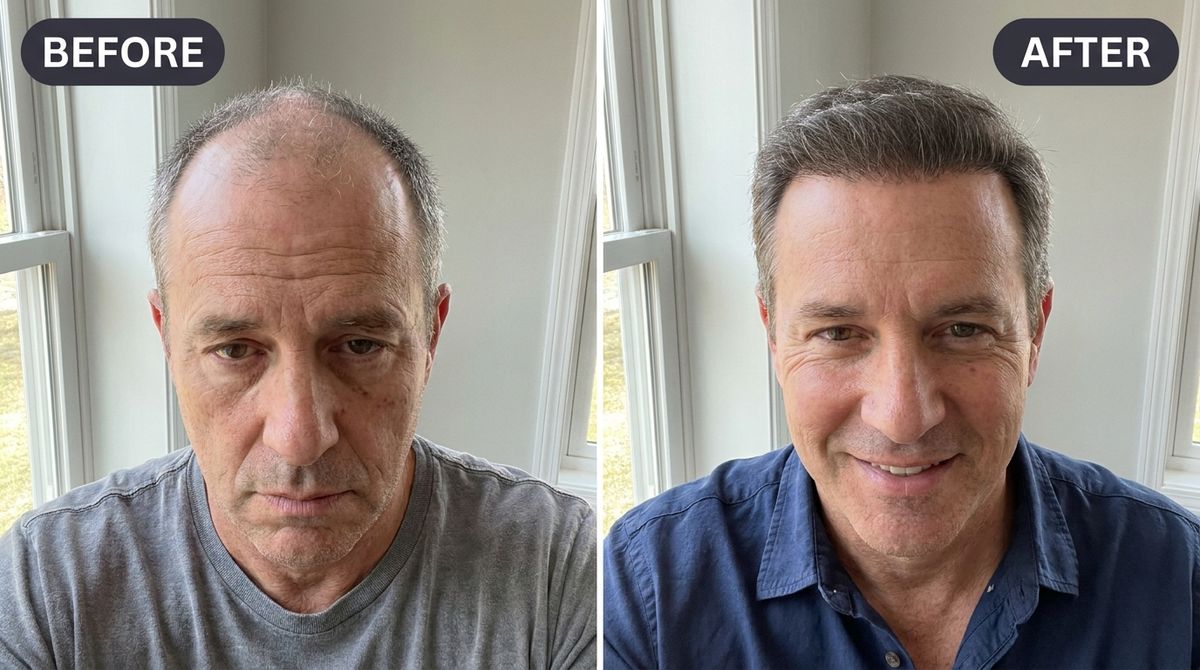
Used right, it's a few minutes every two weeks. Here's the order things tend to happen.
Days 1–7, the shedding eases. Less on the pillow, less on the drain. The follicle isn't being clamped at the receptor anymore.
Weeks 2–4, the first new hairs. Soft, wispy strands along the hairline and the edges of bare zones. That's brand-new growth from follicles that have been shut a long time.
Weeks 5–8, density. The new hairs thicken, the old ones strengthen, less scalp shows under hard overhead light. People start to notice before you mention it.
Week 12 and on, it fills in. Hairline rebuilding, crown filling, growth holding instead of cycling out fast like before.
We Tracked A Group Of Men
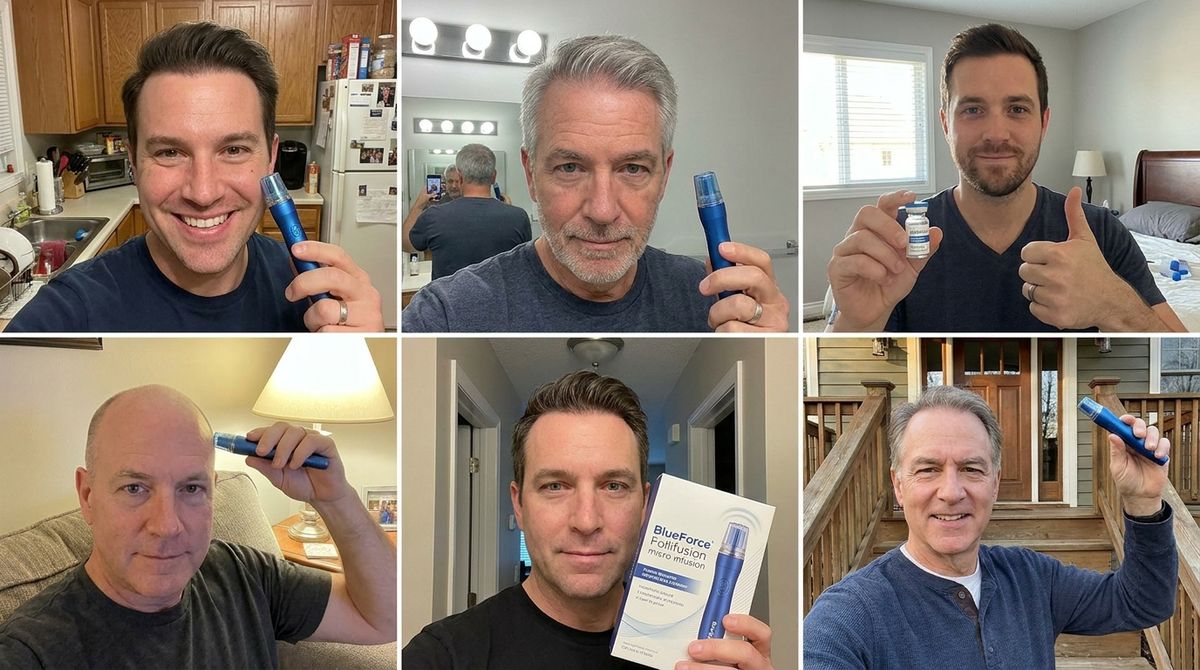
We followed a group of men through their first cycle and asked them to photograph every four weeks. This is informal, user-reported feedback, not a clinical trial, and results vary from person to person.
But the pattern was consistent enough that it's worth showing.
- Most reported visible new growth by the end of the cycle
- First weeks is when most men said the shedding eased off
- Very few asked for a refund
- Every 2 weeks a few minutes, the whole routine
What The Usual Options Actually Cost
I'm going to put the numbers next to each other, because the math changes how this feels.
A hair transplant runs $8,000 to $15,000, more if you fly somewhere for it, with scabs, swelling, and no fix for the hormone that started the loss. PRP injections at a clinic mean repeated visits at a few hundred dollars each. Finasteride is a monthly cost for the rest of your life, and the day you stop, the clock restarts. Foam is forever, too.
Given what's inside it, clinical-grade peptides plus the device, a system like this could honestly carry a clinic-style price. The regular price is $199.95.
But that's not what you'll pay today. Because the whole reason I built this was to take it out of the clinic, I pushed to keep it within reach. Right now it's 50% off, and they cover the shipping.
Why It's Half-Off Right Now
I'd rather a thousand men try this than have the few who can afford a clinic do it. So we run it direct, at half price, while we can.
You're Not Gambling On This
Here's the part that makes it simple. Hair takes time, so we give you real time. Every order is backed by a 90-day money-back guarantee.
Stamp it, feed your follicles, give it the weeks. If you don't see your hair changing, you send it back and you're refunded. Almost nobody we've tracked has asked for that refund.
Keep checking the mirror
You wake at dawn and your hand goes to the thin spot, same as it did this morning. Another foam. Another shedding shower. Another year of the road only running one way, because you decided the tap was dead when it was only shut.
Open the line
Or you spend a few minutes every two weeks putting the right water down the pipe. The shedding eases in the first weeks. New hairs come in by week four. And by month three you're leaving the cap in the drawer.
How To Start Today
- Tap the button below to see if it's still in stock at the half-off price.
- Choose your supply. The 3-month bundle is what most men pick, because it locks the lowest per-month price and carries you to the point where the density really shows.
- Enter your shipping. They cover the postage.
- Use it for a few minutes every two weeks. Pour, stamp the thinning zones, let it absorb.
- Photograph every four weeks. If your hair isn't changing inside 90 days, send it back for a full refund.
Don't Close This The Way I Almost Did
Later is another morning with your hand on the thin patch. Later is another shower you count. Later is the day the batch sells out and the price goes back up.
I spent 17 years telling men the road only ran one way. I was wrong, and it took my own wife holding my hand too tight at a dinner table to make me find out.
Don't wait for your own version of that table. Open the line.
With respect, and some urgency,
Dr. Tobias Brandt
P.S. Linda used it before I'd tell a single patient to. Last month she handed me her phone to take the photo. No hand over the part, no angling away. That's the whole reason this exists.
P.P.S. The licensing complaint went nowhere. The method is a cosmetic device and serum, not a drug. But the field still hasn't said the words 'we were wrong,' and I don't expect it to. You don't need them to. You just need to open the line.


